
TL;DR:
- Discipline depends on aligning self-image with the man you're becoming.
- Building lasting habits involves identity-based change, triggers, and consistency over time.
- Combining psychological techniques with lifestyle habits creates resilient, long-term transformation.
Discipline doesn't slip because you're weak. It slips because your self-image hasn't caught up with the man you're trying to become. You can grind through another 30-day challenge, white-knuckle your way through a new routine, and still end up exactly where you started. The reason most men cycle through motivation and collapse isn't a lack of effort. It's a lack of identity alignment. This guide breaks down the most effective, research-backed strategies for building real discipline, dismantling self-sabotage, and making lasting change feel inevitable instead of exhausting.
Table of Contents
- Start with your identity: The root of change
- Break self-sabotage cycles: Handling discipline pitfalls
- Build discipline through powerful habits
- Stack positive psychology with lifestyle medicine
- Compare approaches: Which strategy fits your situation?
- Why quick hacks fail: Lasting change is an identity battle
- Ready to start your transformation with expert guidance?
- Frequently asked questions
Key Takeaways
| Point | Details |
|---|---|
| Start with identity | Changing how you see yourself builds discipline that lasts far longer than sheer willpower. |
| Interrupt self-sabotage | Learn to recognize and break cycles of self-defeat for consistent progress. |
| Habits drive results | Stable, repeated actions form the backbone of a new, more disciplined identity. |
| Stack strategies for success | Combining positive psychology with lifestyle changes brings the greatest long-term gains. |
Start with your identity: The root of change
Every behavioral shift you've ever tried to force through sheer willpower was fighting against something deeper: your existing self-image. If you still see yourself as "the guy who quits," every new habit you build is running on borrowed time. The research is clear that identity-based habit change leads to lasting behavior change, not outcome chasing.
This is why identity drives lasting change more reliably than motivation ever will. Motivation is a feeling. Identity is a filter. When you genuinely see yourself as a disciplined man, skipping the gym feels wrong. When you still see yourself as someone "trying to get fit," skipping feels normal.
"Every action you take is a vote for the type of person you wish to become." — James Clear, Atomic Habits
The practical shift here is moving from outcome-based language to identity-based language. Stop saying "I'm trying to quit drinking." Start saying "I'm not that guy anymore." It sounds small, but it rewires the internal narrative you run every single day.
Here's how to start casting identity votes right now:
- Choose one identity statement that reflects who you're becoming, not who you've been.
- Take one small action daily that aligns with that identity, even if it takes five minutes.
- Log it. A written record of small wins builds visible proof that you're changing.
- Review weekly. Notice patterns. Celebrate consistency, not perfection.
These identity-based strategies for men work because they shift the question from "Can I do this?" to "Is this who I am?" That's a fundamentally different psychological position, and it's far more durable.
Pro Tip: Don't wait until you feel ready to claim a new identity. Claim it first, then let your actions catch up. The feeling follows the behavior, not the other way around.
The biggest pitfall men fall into is treating identity change like a destination. It's not. It's a daily practice of casting votes through small, consistent actions. Miss a day? Cast the next vote. That's how you tip the scale.
Break self-sabotage cycles: Handling discipline pitfalls
Shifting identity is vital, but many men still get tripped up by internal sabotage. Here's how to break the cycle for good.
Self-sabotage isn't a character flaw. It's a learned pattern rooted in psychology. Research shows that self-sabotage stems from low self-regulation and fear of failure or success. That means the man who keeps blowing up his progress right before a breakthrough isn't lazy. He's running a deeply wired protection program.

Roughly 24% of men report compulsive self-defeating patterns that actively undermine their own goals. That's not a fringe issue. That's one in four.
The most common signs you're in a self-sabotage loop:
- Procrastinating on tasks that actually matter to you
- Harsh internal self-talk after any small setback
- Sudden loss of motivation right when momentum builds
- Starting over repeatedly instead of continuing through friction
"Self-sabotage is the brain's way of protecting you from the discomfort of change. Interrupting the pattern requires deliberate awareness, not just willpower."
The fix isn't to push harder. It's to get smarter about your triggers. Understanding why men self-sabotage starts with tracking the specific moments when you bail. What happened right before? What were you feeling? What story did you tell yourself?
Once you identify your trigger pattern, you can insert a deliberate pause before the automatic response kicks in. That pause is where change lives. Use it to ask: "What would the man I'm becoming do right now?"
To end self-sabotage for good, build functional self-regulation through small, repeatable wins. Each time you choose the harder right thing over the easier wrong thing, you weaken the old pattern and strengthen the new one.
Build discipline through powerful habits
Defusing self-sabotage creates space to take action. Now see how to build unstoppable discipline through habits.
Discipline isn't a personality trait. It's an infrastructure. The men who seem effortlessly disciplined have simply built systems that make the right behavior the path of least resistance. And science backs this up: habit formation for health behaviors typically takes a median of 59 to 66 days, not the 21 days you've probably heard.
Here's a simple framework to lock in lasting habits:
- Pick three core non-negotiables. These are the behaviors that, if done consistently, move the needle most on your identity and goals.
- Build a cue-action-reward chain. Every habit needs a trigger (cue), a behavior (action), and a payoff (reward). Design all three intentionally.
- Track consistency, not perfection. A habit tracker that shows 80% consistency over 90 days beats a perfect streak that breaks and gets abandoned.
- Stack new habits onto existing ones. Attach your new behavior to something you already do automatically.
- Audit monthly. Drop what isn't sticking. Double down on what is.
Pro Tip: Choose habits you actually want, not just the ones you think you're "supposed" to have. Intrinsic motivation makes the habit stick far longer than external pressure.
| Habit type | Time to automate | Difficulty level | Identity impact |
|---|---|---|---|
| Morning movement | 60-90 days | Medium | High |
| Journaling | 45-60 days | Low | High |
| Nutrition tracking | 66-90 days | Medium | Medium |
| Cold exposure | 30-60 days | High | Very high |
The self-discipline guide principle here is that strong habits build the case for your new identity. Every rep, every logged meal, every early morning is another vote. You're not just building a routine. You're building proof.
Use self-improvement routines that prioritize consistency over intensity. A moderate habit done daily beats an extreme habit done twice a week.
Stack positive psychology with lifestyle medicine
With core habits in place, maximize your progress by stacking these powerful approaches for even greater gains.
Positive psychology interventions, or PPIs, are structured practices that build psychological strengths like gratitude, optimism, and self-compassion. They're not soft. PPIs combined with lifestyle medicine improve health behaviors with consistent, measurable results across multiple meta-analyses.
Lifestyle medicine covers the physical inputs: sleep, nutrition, and movement. These aren't optional add-ons. They're the biological foundation your discipline runs on. Poor sleep alone tanks self-regulation by up to 30%. You can't out-discipline a broken body.
| Intervention | Effect on discipline | Effect on mood | Ease of implementation |
|---|---|---|---|
| Sleep optimization | Very high | Very high | Medium |
| Resistance training | High | High | Medium |
| Gratitude practice | Medium | High | Low |
| Nutrition quality | High | Medium | Medium |
| Mindfulness | Medium | High | Low |
Research also shows that cognitive restraint drives long-term lifestyle change. Cognitive restraint means planned, intentional control over your choices, not white-knuckling it. Men who plan their meals, workouts, and recovery windows outperform those who rely on in-the-moment willpower.
Here's how to stack these approaches effectively:
- Anchor a gratitude or journaling practice to your morning routine
- Pair movement with a podcast or music you genuinely enjoy
- Use positive habits to reinforce your identity narrative daily
- Treat sleep as a performance tool, not a reward
Pro Tip: Habit stacking works best when the new behavior feels like a natural extension of something you already do. Attach mood-boosting activities to existing anchors, and the resistance drops dramatically.
When you combine PPIs with lifestyle medicine and lasting self-improvement cycles, the compounding effect is real. Each element reinforces the others, making the whole system more resilient than any single strategy alone.
Compare approaches: Which strategy fits your situation?
You've learned the building blocks. Now see all the strategies compared side-by-side to pick your action plan.
Research confirms that habit strength correlates strongly with identity, meaning the more aligned your habits are with who you believe you are, the more automatic and durable they become.
| Strategy | Best for | Time to results | Difficulty |
|---|---|---|---|
| Identity reframing | Recurring self-doubt | 30-60 days | Medium |
| Self-sabotage interruption | Repeated relapses | 2-4 weeks | High |
| Habit loops | Lack of momentum | 60-90 days | Medium |
| Lifestyle stacking | Needing structure | 30-60 days | Low |
If you're stuck in recurring self-doubt, start with identity work. If you keep relapsing, focus on self-reflection and structure to interrupt the sabotage cycle first. If you lack momentum, build one keystone habit and let it pull others into place.
| Key takeaway | Core action |
|---|---|
| Identity beats willpower | Claim your identity before you feel ready |
| Sabotage is learned | Track triggers, insert a pause |
| Habits take 59-66 days | Build for consistency, not perfection |
| Stack your interventions | Combine lifestyle and psychology for compound gains |
The expert recommendation is to start with identity, then layer in habit systems, then add lifestyle and psychological interventions as your capacity grows. Don't try to overhaul everything at once. That's how habits drive success without burning you out.
Why quick hacks fail: Lasting change is an identity battle
Having compared your options, here's a truth most guides won't tell you.
Most mainstream advice treats discipline like a volume knob. Just turn it up. Wake up earlier, try harder, download another app. But that framing misses the entire point. Discipline isn't something you have. It's something you are, and that distinction changes everything.
The men who finally break their cycles aren't the ones who found the perfect morning routine. They're the ones who stopped negotiating with their old identity. Every small win you log, every trigger you catch before it collapses you, every day you show up when you don't feel like it, that's not just a streak. That's lasting change through identity, built one invisible vote at a time.
Perfectionism is the enemy here. Men who chase perfect execution quit the moment they slip. Men who track progress keep going because they understand that a missed day is data, not defeat. Flexible routines built on identity outlast rigid systems built on willpower every single time.
Ready to start your transformation with expert guidance?
If you're ready to become the man who never goes back, here's how you can move forward even faster.
The strategies in this guide are the foundation. But knowing what to do and actually wiring it into your identity are two different things. That's where structured support changes the game.
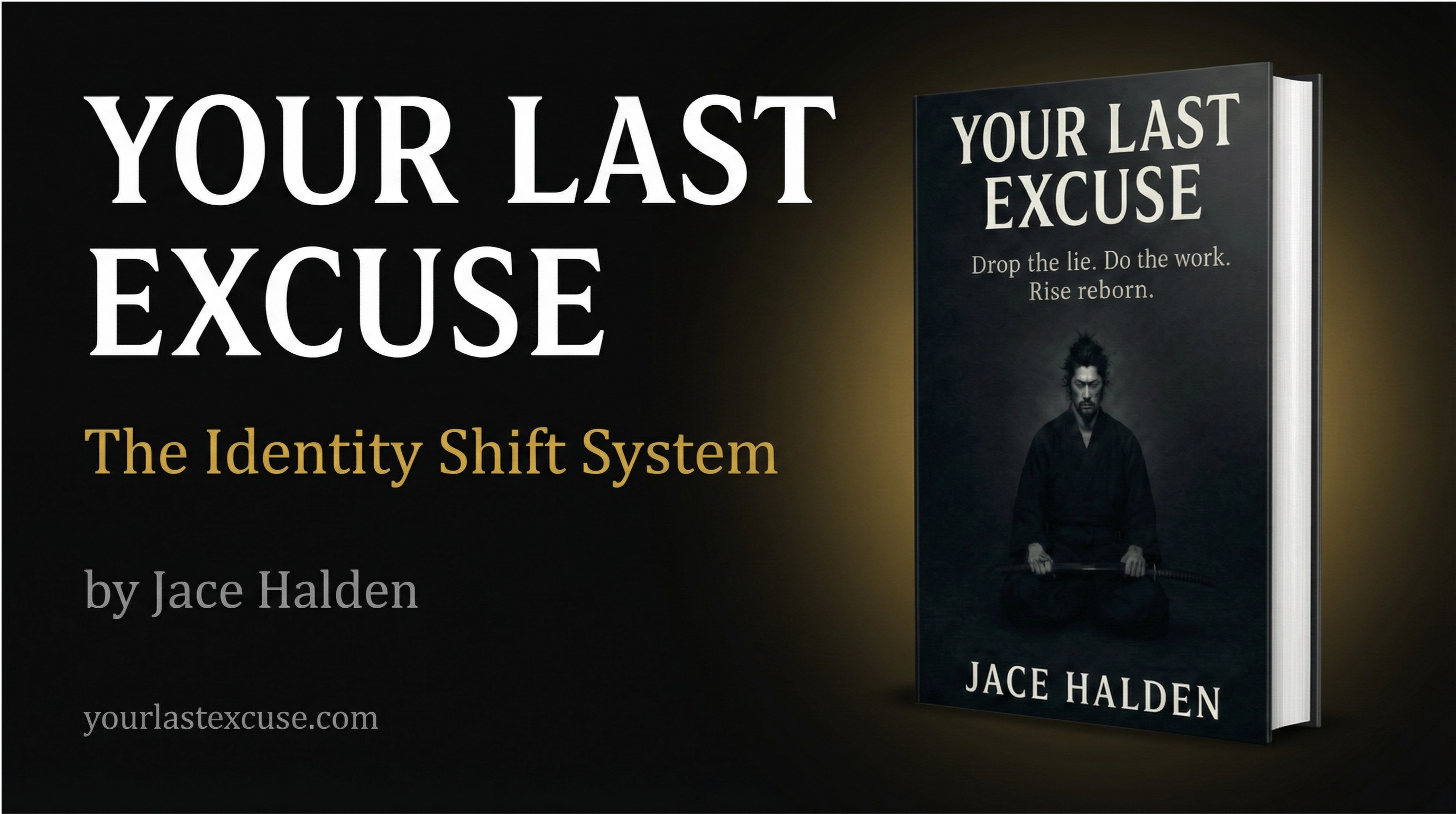
Your Last Excuse is built specifically for men who are done cycling through motivation and collapse. The Identity Shift System walks you through the exact psychological process of rewiring your self-image, building unbreakable habits, and eliminating the excuses that keep pulling you back. If you're serious about applying these end self-sabotage steps with a proven framework behind you, this is your next move.
Frequently asked questions
How long does it take to build a new habit?
Science shows it typically takes 59 to 66 days of consistent repetition for health behaviors to become automatic, though individual timelines vary based on complexity and consistency.
Why do men self-sabotage even when they know better?
Self-sabotage is usually driven by perfectionism, low self-regulation, and ingrained fear of failure or success, and research confirms it's a learned psychological pattern, not a character flaw.
Do positive psychology techniques really work for lasting change?
Yes. PPIs plus lifestyle medicine produce small to moderate but consistent improvements across multiple meta-analyses, especially when combined with behavioral habit work.
Is willpower enough to change long-term?
No. Long-term change depends far more on identity-based habit change and building automatic systems than on relying on willpower, which depletes under stress and fatigue.