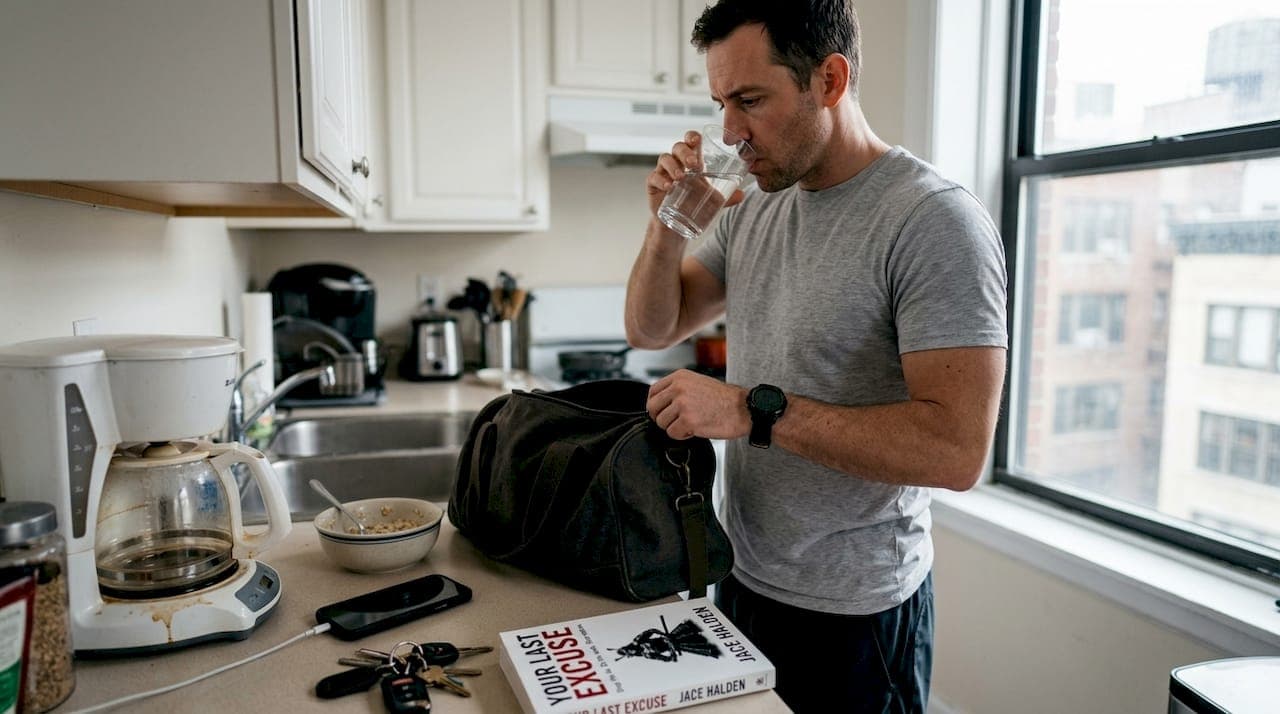
Most men don't fail at self-improvement because they lack information. They fail because the psychological barriers underneath never get addressed. You start strong, hit friction, collapse, and then shame yourself into another false start. That cycle is exhausting, and it's not a character flaw. Self-compassion accelerates habit formation over self-criticism, which means the way you talk to yourself after a slip matters more than the slip itself. This article breaks down four practical routines built around that reality, plus a framework to help you pick what fits your life right now.
Table of Contents
- How to select self-improvement routines that work
- Routine #1: Mindfulness and meditation for habit change
- Routine #2: Exercise and movement — The compound effect
- Routine #3: Nutrition and sleep — Foundations for change
- Routine #4: Audit your self-sabotage patterns
- Side-by-side comparison: Which routine fits you best?
- Ready to break your last excuse?
- Frequently asked questions
Key Takeaways
| Point | Details |
|---|---|
| Aim for sustainability | Choose routines you can stick to 80% of the time rather than chasing perfection. |
| Small habits compound | Simple daily actions like a 20-minute walk or mindful breathing create lasting change. |
| Audit and reframe patterns | Regularly reviewing self-sabotaging behaviors and reframing negative thoughts is key for transformation. |
| Build from foundations | Sleep, nutrition, and basic movement set the stage for self-discipline and resilience. |
How to select self-improvement routines that work
Before you pick a routine, you need criteria. Without them, you'll keep choosing routines that look impressive but collapse under real-life pressure. The goal isn't the most ambitious plan. It's the one you'll actually stick to.
Here's what a sustainable routine looks like:
- Manageable steps: Each habit should take less than 20 minutes to start. Complexity kills follow-through.
- Built-in self-compassion: The routine accounts for bad days instead of demanding perfection.
- Trackable progress: You measure adherence, not just outcomes. A journal or app works fine.
- Psychological fit: The routine addresses your actual friction points, not someone else's.
The benchmark that matters most is 80% adherence for sustainability. That means missing one day out of five is still a win. Most men abandon routines because they miss one day and treat it like total failure. That's perfectionism, not discipline.
The other trap is relying on motivation. Motivation is a feeling. It fluctuates. Consistency beats perfection every time, and the men who build real self-discipline for lasting success do it through systems, not willpower spikes.
Pro Tip: Create a "bad day" version of every habit. If your full workout is 30 minutes, your bad day version is 5 push-ups. Showing up in any form keeps the identity intact.
Routine #1: Mindfulness and meditation for habit change
This is the routine most men skip because it feels soft. That's a mistake. Mindfulness is one of the Harvard-recommended timeless habits for better health, and it directly targets the automatic patterns that drive self-sabotage.
Here's a simple sequence to start:
- Box breathing (5 minutes): Inhale for 4 counts, hold for 4, exhale for 4, hold for 4. Repeat. This activates your parasympathetic nervous system and reduces reactive decision-making.
- Guided meditation (10 minutes): Use an app like Headspace or Calm. Focus on observing thoughts without reacting to them.
- Intention setting (2 minutes): Write one sentence about what you want to do today, not what you want to avoid.
The reason this works for ending self-sabotage is that it interrupts automatic negative thought loops before they hijack your behavior. You're not suppressing thoughts. You're creating a gap between trigger and response.
"Meditation strengthens discipline by breaking the automatic patterns that pull men back into self-sabotage. It's not about relaxation. It's about rewiring your default responses." — Discipline Without Drama
Start with 17 minutes total. That's it. The consistency of showing up daily matters far more than session length.
Routine #2: Exercise and movement — The compound effect
You don't need a gym membership or a perfect program. You need movement that happens consistently. That's the entire game.

Small repeated habits compound over time in ways that single intense efforts never do. A 20-minute walk every day for a year outperforms three months of intense training followed by burnout. Every time.
Here's a minimal movement stack for busy men:
- 20-minute walk: Morning or lunch break. No gear required. Clears cortisol and resets focus.
- 10 push-ups: Floor, no equipment. Builds the identity of someone who moves daily.
- 5-minute stretch: Hips and shoulders. Reduces physical tension that feeds mental stress.
Statistic callout: 80% adherence outperforms 100% attempts that collapse. Men who aim for perfect consistency quit faster than men who plan for imperfection.
The Harvard-recommended approach emphasizes daily movement over sitting, not peak performance. That reframe matters. You're not training for a competition. You're building a baseline that supports every other area of your life.
This also connects directly to self-discipline for lasting success. Each time you complete even the minimal version of this routine, you reinforce the identity of a man who follows through. That identity is what sustains behavior when motivation disappears.
Routine #3: Nutrition and sleep — Foundations for change
You can have the best mindset routine in the world and still sabotage yourself if you're running on four hours of sleep and processed food. The body and brain are not separate systems.
Harvard recommends 7 to 9 hours of sleep, a whole foods diet, and toxin avoidance as foundational habits. These aren't optional upgrades. They're the floor everything else is built on.
Here's what to prioritize:
- Sleep hygiene: Set a consistent bedtime alarm, not just a wake-up alarm. Dim screens 60 minutes before bed. Keep your room cool and dark.
- Meal prepping: Batch cook two or three lunches on Sunday. Decision fatigue is real, and hungry men make worse choices.
- Hydration: Drink water before coffee. Dehydration mimics fatigue and tanks focus before your day starts.
- Toxin reduction: Alcohol and ultra-processed food directly impair the prefrontal cortex, which is the part of your brain responsible for self-control.
Poor sleep is one of the most overlooked drivers of self-sabotage. When you're sleep-deprived, your brain's threat response amplifies and your capacity for ending self-sabotage shrinks. You're not weak. You're running on empty.
Pro Tip: Batch cook lunches for three days at a time and set a phone alarm labeled "wind down" 90 minutes before bed. Two small prep wins that remove daily friction.
Routine #4: Audit your self-sabotage patterns
This is the routine most men never do, which is exactly why they keep repeating the same cycles. You can't fix what you haven't named.
Two patterns drive most male self-sabotage. The first is self-handicapping, which means withholding full effort so you have an excuse if you fail. The second is learned helplessness, where repeated failures convince you that effort doesn't matter. Both are psychological traps, not personality traits.
Automatic negative thoughts (ANTs) fuel both patterns. Catching absolute words like "always," "never," and "I can't" is the first step to reframing them.
Here's a simple audit process:
- Review your track record honestly: Where have you consistently quit? Write it down without judgment.
- Identify the pattern: Is it perfectionism, avoidance, or external blame? Name the mechanism.
- Reframe the thought: Replace "I always fail at this" with "I haven't found the right system yet."
| Common trigger | Self-sabotage response | Reframe strategy |
|---|---|---|
| Missing one workout | Quitting the whole routine | "One miss doesn't erase the streak" |
| Work stress | Skipping sleep and eating poorly | "Stress is when routines matter most" |
| Criticism from others | Withdrawing effort entirely | "Their opinion doesn't control my output" |
| Slow progress | Abandoning the plan | "Compound growth is invisible early" |
Shifting to an internal locus of control, meaning you believe your actions drive outcomes, is the core psychological move here. It's not about optimism. It's about accountability without self-destruction.
Side-by-side comparison: Which routine fits you best?
You've seen each routine in detail. Here's a direct comparison so you can choose your starting point.
| Routine | Time needed | Best for | Difficulty |
|---|---|---|---|
| Mindfulness and meditation | 17 min/day | Stress, reactive behavior, ANTs | Low |
| Exercise and movement | 20-35 min/day | Low energy, motivation issues | Low to medium |
| Nutrition and sleep | Ongoing | Willpower, focus, mood stability | Medium |
| Self-sabotage audit | 15 min/week | Repeated failure cycles, avoidance | Medium to high |
Here's how to match your situation:
- Stressed and reactive: Start with mindfulness. It creates the mental space everything else needs.
- Low energy and unmotivated: Start with movement. Physical momentum shifts psychological state faster than thinking does.
- Constantly slipping on habits: Fix sleep and nutrition first. You're likely fighting biology, not character.
- Repeating the same failure cycle: Do the audit. You need to see the pattern before you can break it.
Motivation and willpower are unreliable as long-term drivers. Systems and environment outlast both. Pick one routine, run it for three weeks, then layer the next one. That's how you build something that doesn't collapse.
The men who succeed at ending self-sabotage don't do everything at once. They start small, stay consistent, and build identity through repeated action.
Ready to break your last excuse?
Knowing the routines is step one. Applying them when life gets hard is where most men stall. That's not a knowledge problem. It's a systems and identity problem.
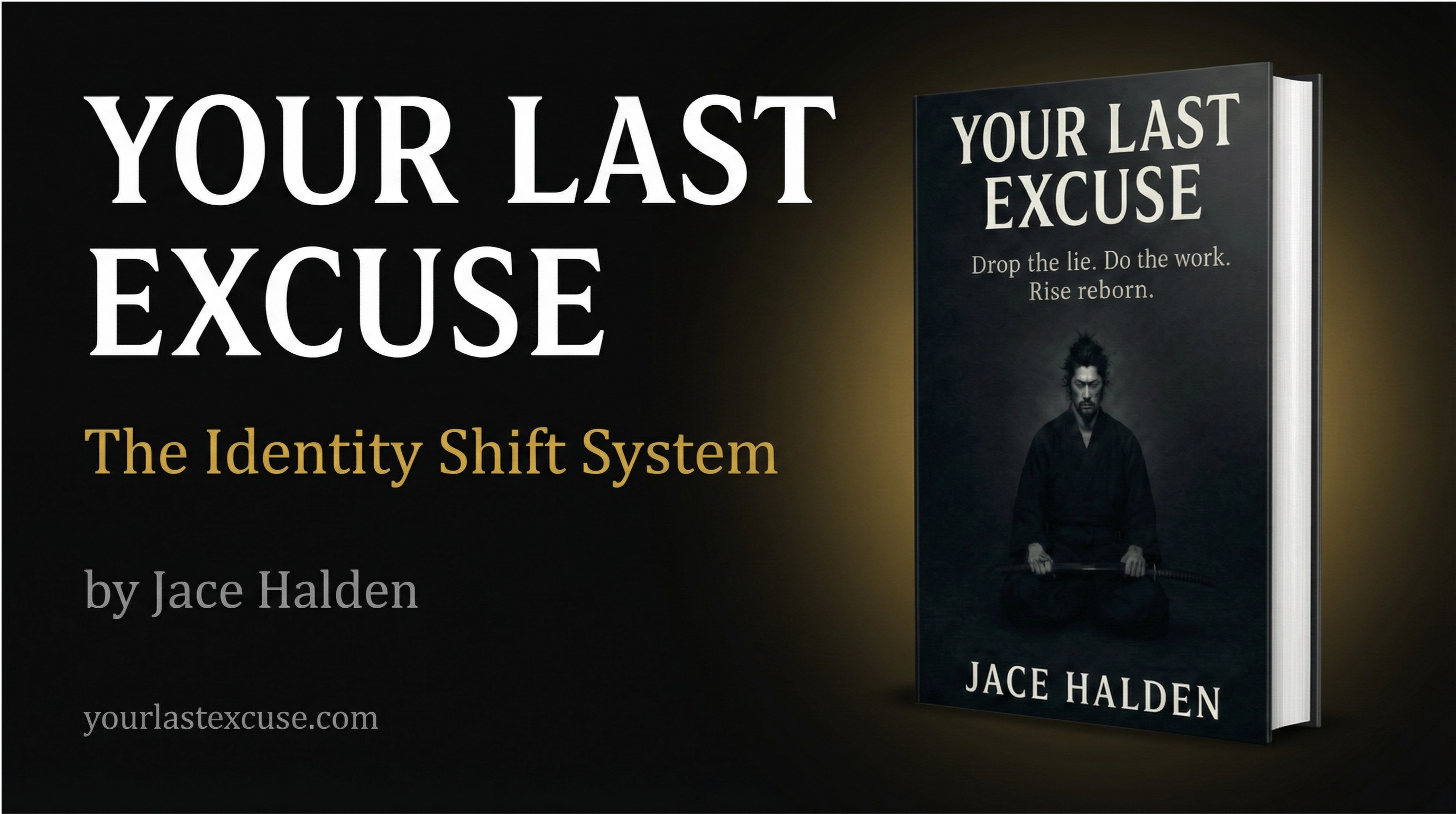
Your Last Excuse is built specifically for men who are done cycling through motivation and collapse. The Identity Shift System goes beyond surface-level habit advice and targets the subconscious beliefs that keep pulling you back. If you're ready to stop white-knuckling your way through routines and start building a self-identity that makes discipline automatic, the tools and frameworks are waiting. You can also go deeper on the psychology with science-backed steps to end self-sabotage and understand exactly what's been running the show.
Frequently asked questions
What's the fastest self-improvement routine for men struggling with motivation?
Start with mindfulness or daily movement, even 10 minutes. Small habits compound quickly and build psychological momentum faster than waiting for motivation to show up.
How can I stop sabotaging my self-improvement routines?
Audit your track record, name the specific pattern driving the behavior, and use reframing to shift toward internal control. Self-handicapping and learned helplessness are the two most common mechanisms, and both respond to honest pattern recognition.
Is perfection needed for self-improvement or can I slip up?
Perfection is not the goal. Aiming for 80% adherence builds far more sustainability than demanding a perfect streak and quitting when you miss.
Do nutrition and sleep really improve self-discipline?
Yes, directly. A whole foods diet and consistent sleep support the prefrontal cortex, which governs self-control, decision-making, and the ability to resist impulsive self-sabotage.