
You already know what you should be doing. You've read the books, set the goals, felt the fire of a fresh start, and then watched it all collapse within weeks. That's not a talent problem or an intelligence gap. Self-discipline outperforms IQ and raw talent as a predictor of lasting success, which means the men who actually change their lives aren't smarter or more gifted than you. They've just built a different internal system. This article breaks down the science, kills the myths, and gives you a concrete action plan to build the kind of discipline that doesn't quit.
Table of Contents
- What self-discipline really means
- The science: Why discipline trumps talent and motivation
- How self-discipline transforms your life
- Self-discipline mechanics: How your brain rewires for change
- Proven strategies to build unstoppable self-discipline
- Overcoming self-sabotage and willpower fatigue
- The sustainable discipline loop: Small wins to lasting transformation
- Make your breakthrough: Discipline starts here
- Frequently asked questions
Key Takeaways
| Point | Details |
|---|---|
| Discipline outperforms talent | Self-discipline predicts success more reliably than IQ or raw motivation in both career and personal life. |
| Daily habits drive change | Small, consistent actions compound over time to create lasting transformation and break old patterns. |
| You can build discipline | Anyone can strengthen self-discipline through practical strategies, even after years of struggling. |
| Science backs up strategies | Neuroscience shows that discipline is a learnable skill that changes your brain for the better. |
| Aligned purpose sustains habits | Connecting actions to personal values and identity makes discipline stick long-term. |
What self-discipline really means
Most men confuse self-discipline with white-knuckling through discomfort. That's not it. Self-discipline is the ability to do what matters most even when you don't feel like it, when motivation has dried up, and when every excuse feels completely valid.
It's worth separating three terms that get tangled together:
- Motivation is the spark. It's emotional, unreliable, and fades fast.
- Grit is your long-term persistence toward a goal that matters deeply to you, a concept pioneered by Angela Duckworth.
- Self-discipline is the daily execution engine. It's what bridges the gap between knowing and doing, every single day.
For men aged 25 to 45 trying to build purpose and consistency, self-discipline is the non-negotiable foundation. Motivation gets you started. Discipline keeps you moving when motivation is nowhere to be found.
"Self-discipline predicts academic performance better than IQ." This isn't a motivational quote. It's a research finding that should completely reframe how you think about your own potential.
The science: Why discipline trumps talent and motivation
Here's where it gets interesting. Most of us were raised to believe that intelligence and natural talent are the ceiling. The research says otherwise.
| Trait | Academic performance | Career success | Long-term well-being |
|---|---|---|---|
| High IQ | Moderate predictor | Moderate predictor | Weak predictor |
| Natural talent | Weak predictor | Moderate predictor | Weak predictor |
| Self-discipline | Strong predictor | Strong predictor | Strong predictor |
The famous Marshmallow Test showed that kids who could delay gratification went on to have better life outcomes across health, finances, and relationships. Angela Duckworth's research on grit found that West Point cadets who made it through brutal training, national Spelling Bee champions, and even people in stable long-term marriages all shared one trait: disciplined persistence, not exceptional talent.
Key stat: Self-discipline predicts success roughly twice as well as IQ when it comes to academic performance. That ratio holds across multiple studies and populations.
The data from the APA's research on high achievers confirms it: discipline outperforms IQ and talent in both academic and real-world life outcomes. This isn't a soft claim. It's a hard finding that changes the game for any man willing to act on it.
How self-discipline transforms your life
Knowing discipline matters is one thing. Seeing exactly what it changes in your daily life is another. The tangible benefits are broader than most men expect.
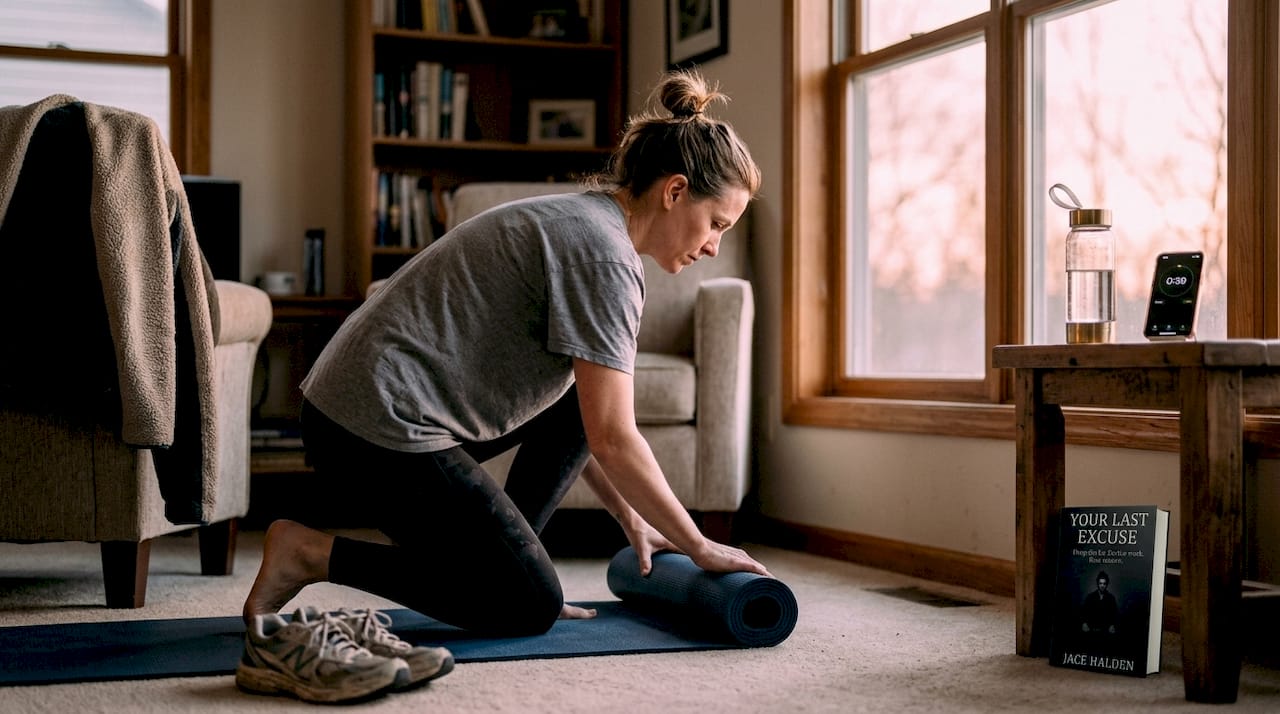
People with high self-discipline are measurably happier, healthier, earn more, and maintain stronger relationships. That's not a vague promise. It's a pattern documented across large-scale studies.
| Life area | Impact of self-discipline |
|---|---|
| Mental health | Fewer anxiety episodes, greater emotional stability |
| Physical health | More consistent exercise, better diet adherence |
| Career | Higher earnings, faster advancement, stronger reputation |
| Relationships | Lower conflict, more trust, better communication |
| Finances | Less impulsive spending, more consistent saving |
Here's what men specifically report when they build real discipline:
- Mental resilience: The ability to absorb setbacks without spiraling
- Career momentum: Consistent output that compounds into visible results
- Health gains: Routine exercise and sleep that stick beyond week two
- Reduced procrastination: Decisions get made faster, tasks get done sooner
The marshmallow test research also showed that delayed gratification, a core component of discipline, predicted lower rates of substance abuse, better physical health, and higher income decades later. This isn't about grinding yourself into the ground. It's about building a system that makes the right choices easier over time.
Self-discipline mechanics: How your brain rewires for change
Here's the part most discipline advice skips entirely: what's actually happening inside your skull when you practice self-discipline.
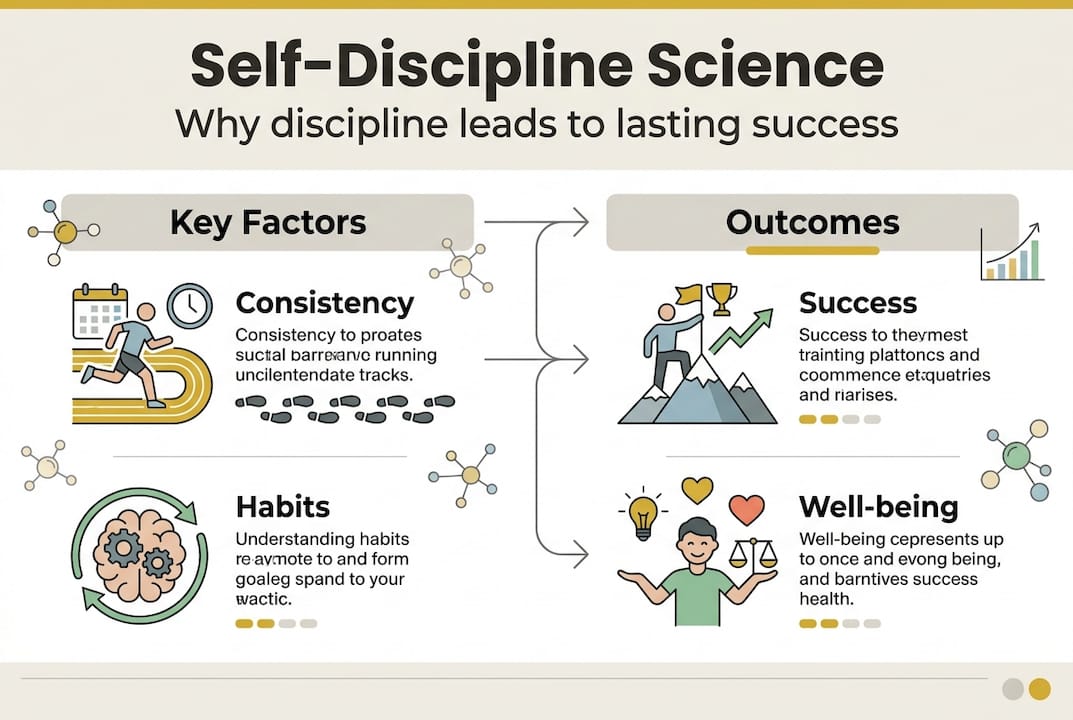
Your prefrontal cortex handles planning, impulse control, and long-term decision making. Every time you override an impulse and choose the harder, better option, you're strengthening that neural pathway. Think of it like a muscle. The more you use it, the stronger it gets.
It's also worth understanding the difference between grit and self-control. Grit is your long-haul persistence toward a meaningful goal, like building a business or getting fit. Self-control is the moment-to-moment ability to resist the pull of distraction or instant gratification. Both matter, but they operate differently. Men who confuse the two often burn out trying to use grit for daily impulse management.
"Discipline is not about restriction. It's about training your brain to default to the behaviors that serve your future self. Every small act of self-control is a vote for the person you're becoming."
Pro Tip: Start with one tiny gateway habit tomorrow morning. Make your bed, drink a glass of water before coffee, or do five push-ups the moment you wake up. These micro-actions aren't about fitness or tidiness. They're about training your prefrontal cortex to execute before your excuses have time to load.
Proven strategies to build unstoppable self-discipline
Neuroscience is empowering. But what do you actually do on Monday morning? Here's a practical, ranked action plan built for real life.
- Start micro. Pick one habit so small it feels embarrassing. Two minutes of journaling. One set of push-ups. Tiny wins build the neural groove that bigger habits need.
- Use the STOP technique. When you feel an impulse to quit or avoid, Stop, Take a breath, Observe what you're feeling, and Proceed with intention. It interrupts the automatic avoidance loop.
- Apply the Eisenhower Matrix. Separate tasks into urgent/important quadrants. Most men waste discipline on urgent but unimportant tasks. Protect your energy for what actually moves the needle.
- Run Pomodoro sessions. Work in 25-minute focused blocks with 5-minute breaks. This matches your brain's natural attention cycle and prevents the fatigue that kills follow-through.
- Track your progress visibly. A simple checkmark on a calendar creates a streak you don't want to break. Visual momentum is a real psychological force.
- Design your environment. Remove friction from good habits and add friction to bad ones. Put your gym shoes by the door. Delete social apps from your phone's home screen.
- Get accountability. Tell someone your goal. Better yet, find someone doing the same thing. Practical strategies like these consistently outperform willpower alone in research settings.
Pro Tip: Tomorrow morning, pick just one item from this list and execute it before 9 AM. Don't pick two. One. The goal is to prove to yourself that you follow through, not to overhaul your entire life in a day.
A practical discipline guide for men also highlights that mental toughness, built through consistent small challenges, is linked to lower mortality risk and greater life satisfaction over time.
Overcoming self-sabotage and willpower fatigue
Here's the uncomfortable truth: most men don't fail because they lack information. They fail because they sabotage themselves right when momentum builds. Understanding why this happens is the first step to stopping it.
Self-sabotage is your brain defaulting to familiar patterns when the discomfort of change gets too high. It's not weakness. It's a wiring issue, and it's fixable. The key is recognizing that overcoming self-sabotage requires more than motivation. It requires systems that work even when your willpower is depleted.
Here's what actually works:
- Practice delayed gratification deliberately. Start small: wait 10 minutes before checking your phone after waking up. Build the muscle before you need it.
- Use situational cues. Pair new habits with existing ones. After coffee, I do five minutes of planning. After lunch, I take a 10-minute walk. Cues remove the need for willpower.
- Modify your situation before you need discipline. Lay out your workout clothes the night before. Prep your meals on Sunday. Reduce the number of decisions you need to make under pressure.
- Practice mindfulness. Even 10 minutes a day of focused breathing strengthens executive function and reduces impulsive decision making. This isn't soft advice. It's neuroscience.
Ego depletion is real. Willpower is a finite daily resource. The solution isn't to push harder. It's to front-load your most important habits in the morning before your decision-making capacity gets drained by the noise of the day.
The sustainable discipline loop: Small wins to lasting transformation
All of this comes together in one core idea: discipline becomes permanent when it becomes part of your identity.
When you see yourself as someone who is disciplined, not someone trying to be disciplined, the behavior shifts from effortful to automatic. Consistent actions compound into lasting habits in roughly 59 to 66 days. That's the research-backed timeline. Two months of consistent small actions and the behavior starts to feel like who you are, not what you're forcing yourself to do.
The compounding effect is real. Week one feels like nothing. Month three looks like a different life. Men who align their discipline with a clear sense of purpose, knowing why the change matters, sustain it far longer than men chasing vague goals.
"When your daily actions reflect your deepest values, discipline stops feeling like sacrifice and starts feeling like integrity. That's when transformation becomes permanent."
This is why identity-based change outperforms goal-based change every time. Goals have finish lines. Identity doesn't. A man who is disciplined doesn't need to remind himself to show up. He just does.
Make your breakthrough: Discipline starts here
You now have the science, the strategies, and the framework. But knowing and doing are still two different things, and that gap is exactly where most men stay stuck.

If you've been cycling through motivation, collapse, and shame, that's not a character flaw. It's a pattern with a name and a solution. Your Last Excuse is built specifically for men who are done with that cycle. The Identity Shift System goes beyond surface-level tips to rewire the subconscious beliefs that keep pulling you back. If you're serious about making this the last time you start over, this is where that work begins.
Frequently asked questions
Is self-discipline more important than motivation?
Yes. Discipline outlasts motivation because it operates as a system rather than a feeling. Motivation fades; discipline keeps you executing regardless.
How long does it take to develop self-discipline?
Consistent actions compound into lasting habits in roughly 59 to 66 days. Two months of small, repeated effort is the research-backed threshold for real habit formation.
What's the easiest way to start building self-discipline?
Start with a micro-habit that takes two minutes or less. Something so simple you can't justify skipping it. That's the entry point your brain needs.
Can self-discipline be learned if I've failed before?
Absolutely. Discipline is a trainable skill, not a fixed trait. Every rep of self-control strengthens the neural pathways that make the next rep easier.
How does self-discipline affect physical health?
Disciplined people are healthier because they exercise more consistently, make better dietary choices, and engage in fewer high-risk behaviors. The health benefits compound over time just like the habit itself.